
Editor’s note:
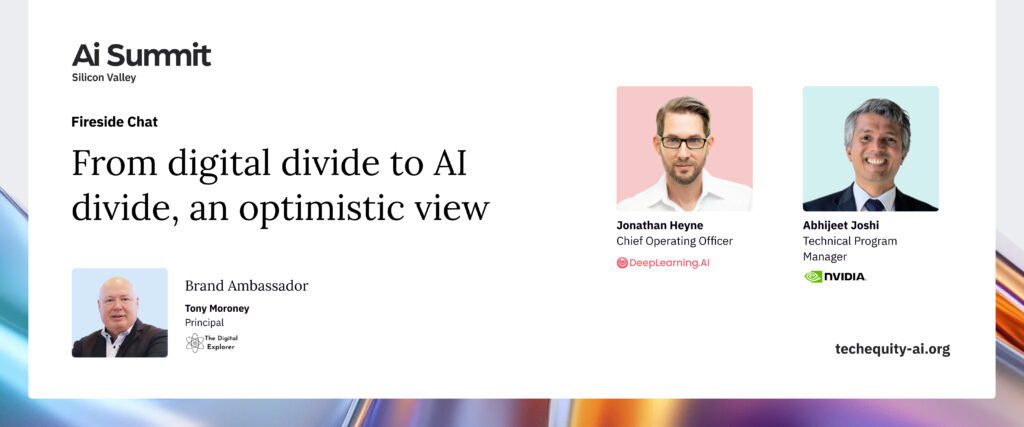
This article was originally written by Tony Moroney and is reposted here with permission. It draws on ideas discussed at the TechEquity Ai Summit 2025 and is shared to prompt deeper reflection on how organizations approach AI-led change.
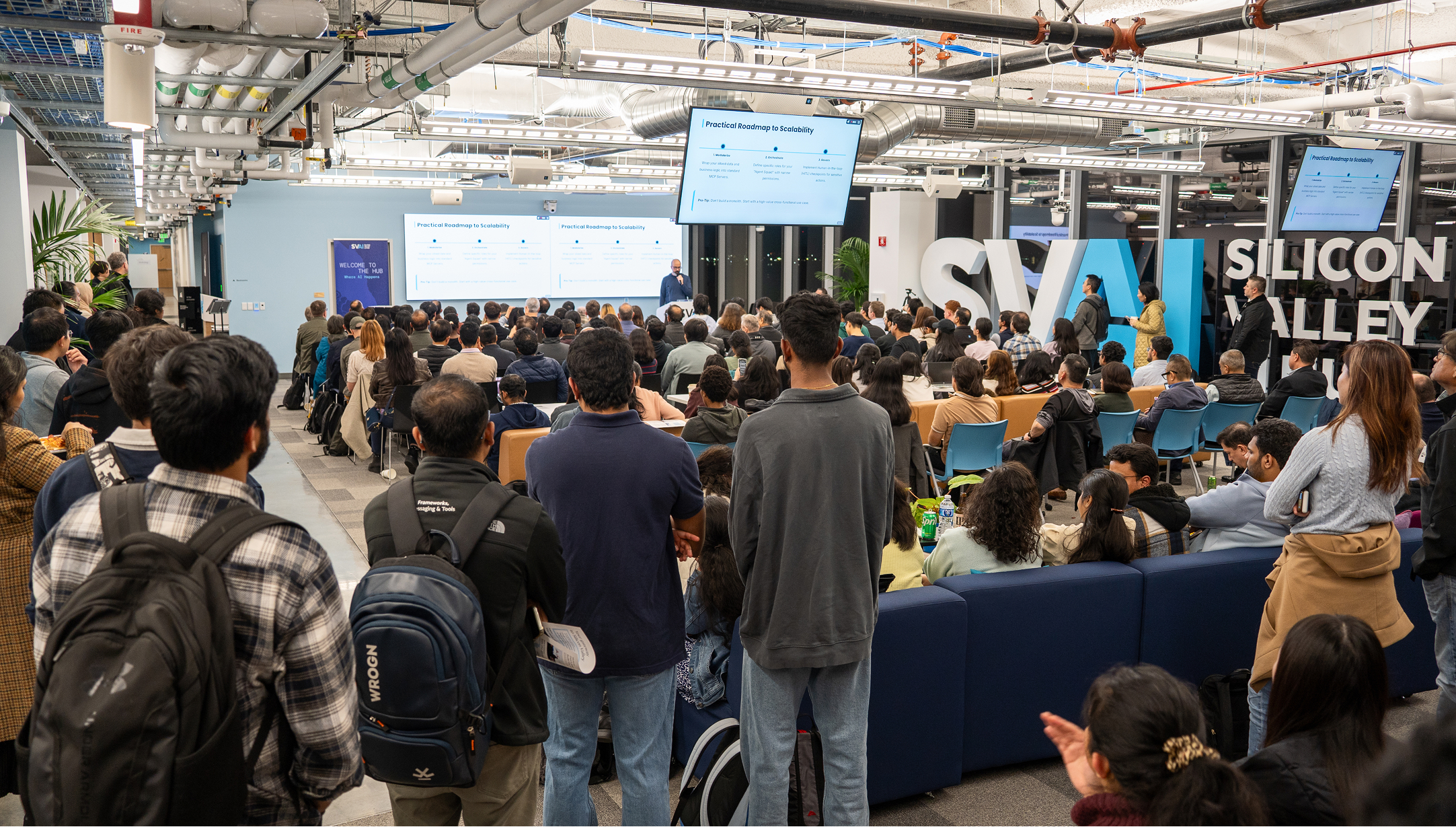
At the TechEquity Ai Summit – Silicon Valley, the stage was not used to sell inevitability or hype dominance, but to invite reflection.
Jonathan Heyne and Abhijeet Joshi did something quietly radical: they reframed AI not as a race, but as a responsibility; not as an arms-length automation story, but as a deeply human learning challenge.
Their provocation was subtle yet profound: the next divide will not be about access to machines, but about how we think, learn, and choose to engage with them.
That idea deserves to be amplified—and challenged further.
From Capability to Complacency
We live in an era where capability is no longer scarce.
The most powerful cognitive tools humanity has ever built are now embedded in everyday devices, available at a price point that would have been unthinkable even a decade ago. And yet, something curious is happening inside organisations, classrooms, and leadership teams.
Despite unprecedented access, progress feels uneven. Productivity gains are inconsistent. Decision quality is volatile. Trust is fragile.
The problem is not that AI is underpowered—it is that we are under-questioning.
The dominant narrative suggests that once AI becomes “good enough,” outcomes will naturally improve. But history tells a different story. Tools do not transform systems on their own. Mindsets do. Institutions do. Incentives do.
The real disruption is not technical. It is epistemic.
The New Divide Is Invisible
The digital divide of the past was tangible: hardware, connectivity, and software licenses. It could be measured, subsidised, and eventually narrowed.
The AI divide is more elusive and therefore more dangerous.
It manifests as:
- An uncritical acceptance of outputs mistaken for insight
- A reliance on fluency over judgment
- A confusion between acceleration and understanding
Two people can have identical tools and radically different outcomes. One uses AI to amplify curiosity, test assumptions, and explore alternatives. The other uses it to confirm bias, shortcut thinking, and outsource responsibility.
The difference is not access. It is literacy, discernment, and intent.
This is the divide that Jonathan Heyne articulated with quiet clarity: AI does not replace thinking—it exposes whether it was there to begin with.
When Automation Reaches the Classroom—and the Boardroom
Education offers a preview of what is unfolding across every knowledge institution.
Content delivery is already automated. Contextual explanation is increasingly machine-assisted.
What remains stubbornly human is the ability to frame good questions, to debate meaning, and to wrestle with ambiguity.
Yet many organisations are doing the opposite. They are automating answers while leaving questions untouched. They deploy AI into broken workflows, misaligned metrics, and outdated governance models—and then express surprise when trust erodes.
This is not an AI failure. It is a leadership failure.
The real test is not whether AI can generate insights faster, but whether leaders are willing to redesign what they value, measure, and reward in a world where answers are cheap but judgment is not.
Bias Is Not a Bug—It Is a Mirror
One of the most unsettling insights shared at the Summit was not that AI systems exhibit bias, but that they do so with unnerving consistency. They reflect patterns we have normalised, encoded, and scaled long before machines entered the scene.
The danger lies not in the presence of bias but in its invisibility when it is wrapped in technical authority.
When outputs arrive with confidence and coherence, they invite abdication: the model said so becomes a convenient substitute for accountability.
AI literacy, then, is not about mastering prompts or tool proficiency. It is about cultivating the reflex to interrogate results, to ask what assumptions are embedded, and to recognise when automation is used to avoid uncomfortable human judgment.
The Myth of the Effortless Future
Many AI narratives promise something seductive: that intelligence will become ambient, frictionless, and effortless. But effortlessness has a cost.
When cognitive labour disappears from view, so does learning.
What emerges instead is a paradox. The more powerful our tools become, the more demanding leadership must be, not in technical expertise but in moral clarity, systems thinking, and institutional courage.
The organisations that will thrive are not those that automate the most tasks, but those that deliberately preserve—and elevate—spaces for human sensemaking: places where disagreement is productive, uncertainty is explored, and decisions are owned.
Reclaim Thinking as a Strategic Asset
The AI divide will not be closed by faster models, better interfaces, or larger datasets. It will be closed—or widened—by the choices leaders make now.
If you are responsible for strategy, education, governance, or transformation, the question is no longer whether to adopt AI. The question is whether you are redesigning your systems to demand better thinking because AI is present, not absent.
This is a moment to:
- Redesign learning around judgment, not recall
- Redefine productivity beyond speed and volume
- Reassert human accountability where automation risks abdication
AI has removed the excuse of scarcity. What remains is a test of intent.
The future will not belong to those with the best tools. It will belong to those who refuse to stop thinking once the answers arrive.
Source and full original version available here:
https://www.linkedin.com/pulse/from-models-meaning-knowledge-new-operating-system-tony-moroney-yr6be/?trackingId=DO%2F5QMZWQAuCHRhb9KmWTQ%3D%3D