
Editor’s note:
This article was originally written by Tony Moroney and is reposted here with permission. It draws on ideas discussed at the AI Summit by TechEquity AI and is shared to prompt deeper reflection on how organisations approach AI-led change.
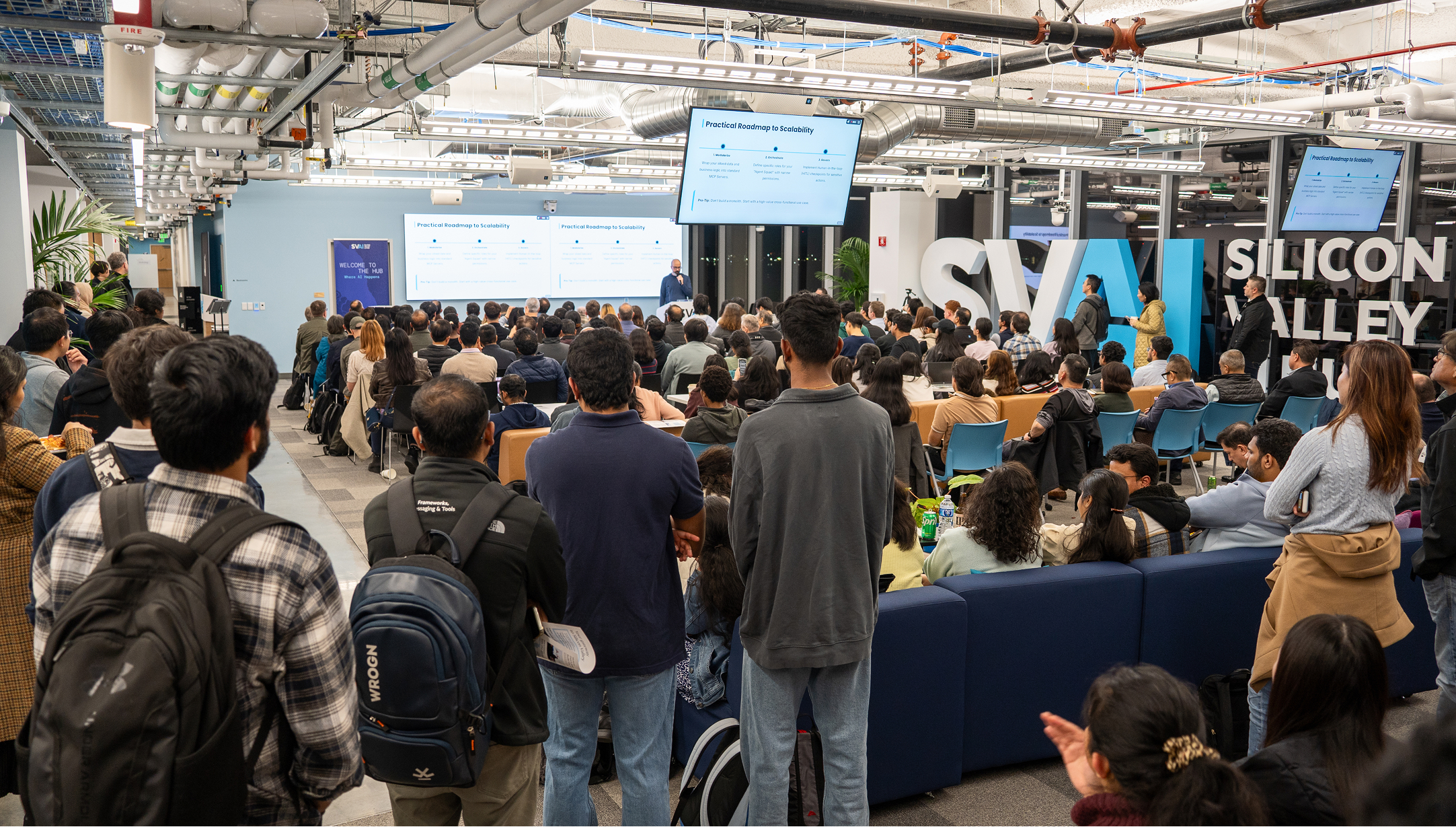
The recent AI Summit by TechEquity AI – Silicon Valley was a reminder of what is genuinely inspiring about this period in technological history.
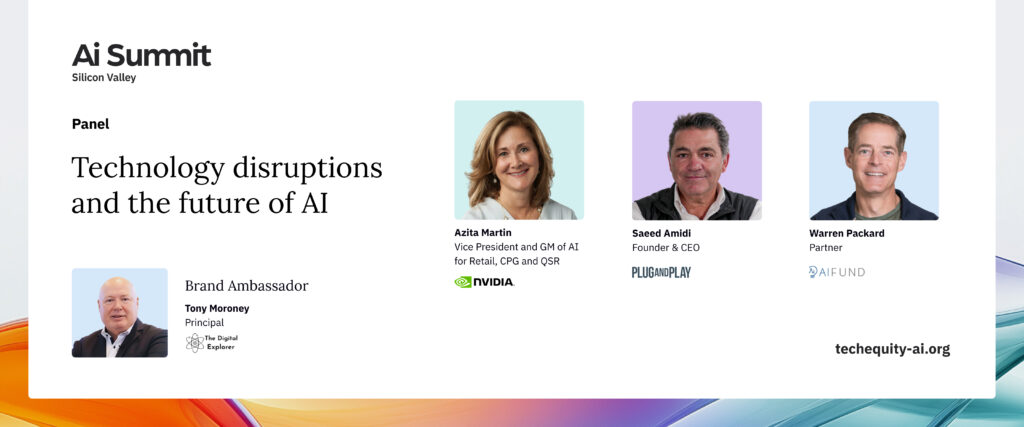
Listening to Azita Martin, Saeed Amidi, and Warren Packard, one could not miss the optimism: an ecosystem accelerating innovation, AI augmenting human capability, and unprecedented opportunities for productivity, entrepreneurship, and impact.
Yet it is precisely because of this momentum that a harder question must now be asked.
For more than a decade, digital transformation has been framed as an engineering challenge: migrate to the cloud, automate processes, deploy AI, and modernise systems.
Boards have funded programmes, executives have appointed transformation leaders, and organisations have proudly declared themselves “AI-enabled”.
Yet beneath the surface, something is quietly breaking.
Productivity gains are marginal. Decision cycles feel faster but no wiser. Employees report tool fatigue rather than empowerment. Customers experience efficiency rather than empathy.
The uncomfortable truth is this: most digital transformations are technically successful yet strategically hollow.
The problem is not the technology. It is the mental model we still use to govern it.
When automation replaces judgment
We have built organisations optimised for efficiency, not sensemaking. AI has amplified this bias.
Algorithms now route work, assess performance, forecast demand, and recommend actions.
In doing so, they increasingly displace not labour but judgment. Decisions are made faster, but often without reflection on why those decisions matter, who they affect, or what assumptions they embed.
This is not a failure of AI capability. It is a failure of organisational design.
When enterprises treat intelligence as something to be extracted from data rather than cultivated through interpretation, AI becomes an accelerant for existing blind spots.
Automation hardens yesterday’s logic into tomorrow’s default behaviour.
The organisation moves quickly—sometimes confidently—towards outcomes it no longer knows how to question.
In this future, risk does not announce itself as a malfunction. It appears as a smooth execution.
The coming split: performative AI vs. cognitive AI
We are approaching a bifurcation.
On one path, organisations continue to deploy what might be called performative AI: systems optimised to execute tasks, optimise metrics, and simulate intelligence through pattern recognition.
These firms will look successful. Dashboards will glow green. Margins may even improve. But over time, adaptability will erode. These organisations will struggle with ambiguity, novelty, and moral complexity—precisely the conditions that define modern markets.
On the other path, a smaller set of organisations will embrace cognitive AI: systems designed not only to act but also to reason with humans.
These enterprises will treat AI as a participant in sensemaking rather than as a substitute for it. They will design governance not around control alone but around interpretability, contestability, and learning.
The difference will not be visible in the model architecture. It will be visible in how decisions are framed, challenged, and revised.
Why culture, not code, will decide the winners
Most organisations assume that intelligence stems from better models. In reality, intelligence stems from better questions.
AI systems trained on historical data inevitably reflect those values. Without deliberate cultural counterweights, they will reinforce existing power structures, risk tolerances, and definitions of success.
This is why AI failures so often appear as ethical lapses, customer alienation, or strategic myopia—rather than as technical breakdowns.
The future enterprise will be characterised not by how advanced its AI is, but by how reflexive it is.
Reflexive organisations institutionalise doubt. They design spaces where human judgment can interrupt automated flows, where frontline insight can challenge algorithmic outputs, and where strategic intent is continuously reinterpreted rather than assumed.
In these environments, AI becomes a mirror rather than a mask—revealing organisational assumptions instead of obscuring them.
A glimpse of possible futures
Imagine three plausible futures unfolding in parallel.
In the first, enterprises double down on scale and speed. AI agents proliferate, workflows self-optimise, and human oversight becomes ceremonial. These firms dominate until they don’t—undone by brittle strategies that fail under conditions they never modelled.
In the second, organisations retreat. Fearful of unintended consequences, they constrain AI so tightly that innovation stalls. Talent leaves, and competitors outpace them. AI becomes a compliance exercise rather than a strategic asset.
In the third and most challenging future, enterprises redesign themselves around human–AI co-agency. Decision rights are rethought. Accountability is redistributed. Leaders are trained not only to use AI but also to think with it. These organisations move more slowly at first—and then much faster, because they can adapt without losing coherence.
Only one of these futures is sustainable.
The leadership reckoning ahead
The next wave of digital disruption will not be led by technologists alone.
It will be led—or blocked—by executives who must confront an uncomfortable shift: leadership is moving from decision-making to decision stewardship.
In an AI-augmented enterprise, leaders will be less valued for having answers and more valued for cultivating the conditions in which good answers can emerge.
This requires philosophical maturity, not merely technical fluency. It demands comfort with uncertainty, humility in the face of machine intelligence, and the courage to redesign power structures that no longer serve the organisation.
Most leadership teams are unprepared for this shift. That is why the disruption ahead will feel sudden, even though it has been building for years.
Redesign before you optimise
The greatest risk facing organisations today is not that AI will move too fast—but that it will move too smoothly.
Now is the moment to pause before scaling further. To interrogate not only what AI is doing but also what kind of organisation it is quietly creating. To redesign governance, incentives, and leadership capability so that intelligence remains a shared, contested, and human-centred endeavour.
Digital transformation is no longer about becoming more efficient. It is about becoming more thoughtful.
Those who recognise this will shape the future. Those who do not will automate themselves into irrelevance.
Source and full original version available here:
https://www.linkedin.com/pulse/quiet-failure-digital-transformation-tony-moroney-mzd6e/?trackingId=AYp6qy4KQ6GcSckAWHk7bQ%3D%3D